饥饿游戏
10 Bollywood Films That Tackled Stereotypes_我的网站

A | Bollywood often gives us entertainment, music, dance, and romance. Sometimes, it provides much more, films that challenge outdated beliefs and encourage society to think differently. Over the years, many filmmakers have bravely confronted stereotypes that were accepted for decades, whether about gender roles, body image, disability, caste, or the LGBTQ+ community.
These movies opened up new discussions in homes, schools, and online platforms. They changed how people viewed sensitive topics and encouraged audiences to approach the world with more empathy and understanding. Here are 10 Bollywood films that boldly questioned old mindsets and inspired meaningful change.
In This Article
Taare Zameen Par (2007)Chak De! India (2007)My Name Is Khan (2010)English Vinglish (2012) Dum Laga Ke Haisha (2015)Pink (2016)Dangal (2016)Padman (2018)Article 15 (2019)Shubh Mangal Zyada Saavdhan (2020)Taare Zameen Par (2007)
Breaking the stereotype around learning disabilities, Aamir Khan’s Taare Zameen Par skillfully changed how people understand children with learning challenges like dyslexia. The film follows Ishaan, a young boy who struggles at school because no one understands his condition. Instead of calling him lazy or slow, the film reveals that every child has a unique way of learning. It encouraged parents and teachers to be more patient, supportive, and emotionally aware. For the first time, mainstream Indian cinema highlighted the importance of mental and emotional health for children.
Chak De! India (2007)
This film challenges gender bias in sports and religious prejudice. Chak De! India shattered many stereotypes at once: the idea that women’s sports are less important, that female athletes don’t deserve equal respect, and that religion defines loyalty. Shah Rukh Khan plays coach Kabir Khan, who trains the Indian women’s hockey team against all odds. The film showcases strong female characters fighting against bias and confirms that determination and teamwork matter more than gender or background.
My Name Is Khan (2010)
This film Challenges Islamophobia and identity prejudice. My Name Is Khan delivered a strong message in one line: “My name is Khan, and I am not a terrorist.” The film challenged harmful stereotypes about Muslim identity after 9/11 and portrayed the emotional struggle of being judged for religion rather than actions. Shah Rukh Khan’s role as Rizwan, a man with autism, added depth to the story. It urged audiences to look beyond labels and recognize people for who they truly are.
English Vinglish (2012)
Breaking stereotypes around women, housewives, and respect. Sridevi's powerful performance illustrated the journey of a housewife who feels undervalued because she does not speak English. The film questioned the stereotype that homemakers are less capable and reminded society that respect should not depend on language or status. It inspired many women to regain confidence and reminded families to appreciate the work done by mothers.
Dum Laga Ke Haisha (2015)
Dum Laga Ke Haisha challenges body-shaming and society's beauty standards. This film challenged the harmful notion that a woman’s worth is tied to her appearance or size. Dum Laga Ke Haisha follows an arranged marriage where the husband, played by Ayushmann Khurrana , initially feels ashamed of his plus-size wife, played by Bhumi Pednekar. The story beautifully demonstrates how love can grow when we look beyond appearances. It sparked a new conversation about body acceptance and self-love in Indian society.
Pink (2016)
Challenging victim-blaming and highlighting consent, Pink marked a pivotal moment in Indian cinema. The film firmly asserted that “No means no” without explanations or conditions. It confronted deep-seated beliefs about how women should behave, what they should wear, and who is responsible when a crime happens. The film exposed the harsh reality of victim-blaming and initiated a nationwide discussion about consent and accountability.
Dangal (2016)
Breaking stereotypes about girls in sports, Dangal tells the true story of wrestler Mahavir Singh Phogat and his daughters Geeta Phogat and Babita Phogat, who defy gender expectations and show that girls can excel in sports traditionally dominated by men. The film challenged attitudes toward women’s strength and ambition and inspired thousands of young athletes across the country. The movie was widely recognized and praised for its authenticity and depiction.
Padman (2018)
This film broke the taboo around menstruation and the menstrual cycle. Padman focused on a topic rarely discussed openly in Indian society, menstrual hygiene. Based on the real-life story of Arunachalam Muruganantham, the film confronted the shame and silence surrounding periods and highlighted the need for safe sanitary products. It encouraged awareness and changed how people talk about menstruation publicly.
Article 15 (2019)
Challenging caste discrimination, Ayushmann Khurrana’s Article 15 revealed the brutal reality of caste inequality in modern India. Inspired by true events, the film focused on justice, human rights, and the need for social reform. It compelled viewers to confront injustice rather than ignore it, starting serious conversations nationwide.
Shubh Mangal Zyada Saavdhan (2020)
Shubh Mangal Zyada Saavdhan broke the stereotypes about LGBTQ+ love and acceptance, This film brought queer love into the mainstream with honesty and humor. Ayushmann Khurrana and Jitendra Kumar played a gay couple fighting for acceptance from their families and society. It broke the stereotype that LGBTQ+ identities should remain hidden or are unnatural. By presenting love in a simple and genuine way, the film contributed to normalizing conversations about sexuality and equal rights.
Cinema can change thoughts, and these films showed that. They broke the silence around topics once considered uncomfortable, challenged outdated beliefs, and paved the way for more inclusive storytelling. Bollywood is slowly evolving into a space that celebrates diversity, acceptance, and real human emotion, and these films played an important role in that change.Also Read: 10 Horror Movies for a Spooky Halloween Night。
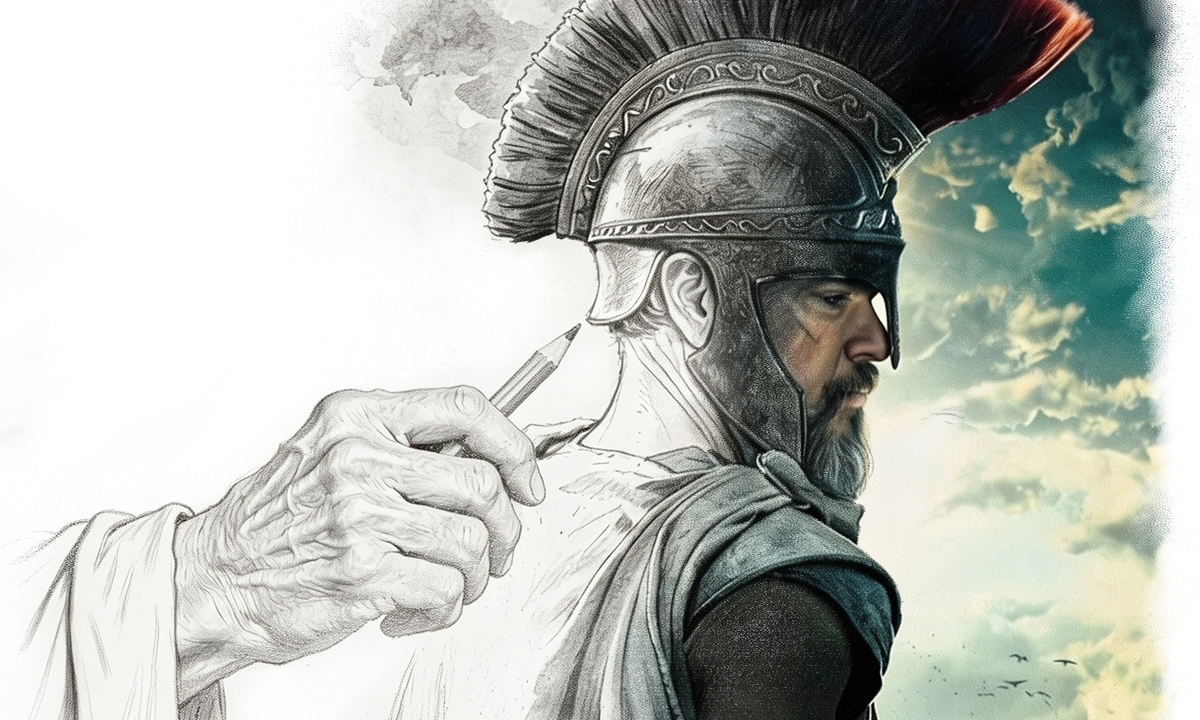
Illustration: Liu Rui/GTChristopher Nolan's new film has attracted considerable attention from audiences and critics around the world. Particularly interesting is its reception in China, where the Beijing premiere provided the occasion for a conversation between Nolan and the Chinese political philosopher Zhong Shu.
We shall first consider some of the positive and negative appraisals of the film, before turning to its significance for Chinese viewers and, more broadly, to possible comparisons between the philosophical and cultural traditions of East and West. This commentary draws primarily on reviews by Emily Wilson in the London Review of Books and in The Atlantic, and Daniel Mendelsohn in the New York Review of Books, as well as on questions raised by Zhong Shu.
It should first be acknowledged that Nolan has produced an impressive action movie, condensing and abridging most of the major episodes of Odysseus' adventurous journey back to Ithaca. Avoiding digital technology based on artificial screens, he gives the story an unusually tangible quality.
The film also benefits from a distinguished cast, whose performances illuminate the different strands of the narrative as conceived by the director. At the same time, the viewer is invited to reconstruct the complex temporal layers of the epic, extending from the fall of Troy to Odysseus' homecoming (
nostos), his reunion with Telemachus and Penelope, and the harsh punishment of the suitors.
Many objections concerning anachronisms in costumes and armor, the use of American English, details of the Mycenaean or Archaic periods, or the casting of particular characters seem unfair. Some degree of anachronism is inevitable, and the pursuit of historical or textual fidelity would ultimately be futile. Nolan was obliged to omit or substantially rework parts of the original narrative in order to fit it into a three-hour film. Some omissions are nevertheless regrettable -- notably the treatment of the Cyclops episode and Odysseus' descent into the Underworld, as well as the complete omission of the Phaeacian episode and his encounter with Nausicaa.
There are, however, more serious grounds for concern with regard to the central idea underlying Nolan's reinterpretation of the
Odyssey. In his attempt to convey a modern moral message largely alien to Homer's world, Nolan presents an Odysseus who has surprisingly little in common with the "complicated" (
polytropos) man depicted by the ancient poet. The ethical ambiguities of a shrewd and resourceful character, ready to deceive and to commit violence in pursuit of his ends, are largely absent from Matt Damon's Odysseus. Instead, we encounter a hero repeatedly tormented by guilt for atrocities perpetrated or condoned during the Trojan War and consequently seeking some form of atonement.
Zhong Shu is therefore justified in asking Nolan whether he intends to "Christianize" Odysseus. The filmmaker seems to have moved him, almost imperceptibly, from what anthropologists have described as a "shame culture" -- the world of Homer, in which honor and fame, as perceived by others, are of central importance -- to a "guilt culture," characterized by an internalized sense of responsibility and remorse for wrongdoing. This latter moral orientation emerges with classical Greek ethics, particularly with Socrates and Plato, and reaches its fullest expression in Christian and post-Christian conceptions of morality.
Nolan appears to believe that such a transition toward guilt follows naturally once we recognize the force of a commitment to "Zeus' law," particularly in the obligations of mutual hospitality (
xenia). He connects these obligations with a version of the "Golden Rule," understood as a principle of reciprocal respect in our treatment of others.
This, however, is problematic as a construal of Homeric morals. Early variants of the Golden Rule can be found from the fifth century BC onwards in Democritus and Isocrates, and later in Epictetus and, of course, in the teachings of Jesus. More importantly, the moral conscience Nolan attributes to Odysseus not only "Christianizes" him; it arguably "Kantianizes" him as well. "Zeus' law" is presented almost as a universal proto-categorical imperative, something that could readily be endorsed by Kant. This differs significantly from the ancient injunction against
hybris: the warning against excessive pride, the transgression of human limits, and the violation of the divine and cosmological order that we encounter throughout Homer's epics.
One may, of course, concede to Nolan the artistic right to create his own Odysseus: a depressed war veteran, conscious of the dangers of violating moral rules, and concerned with preserving the normative foundations of civilization. The difficulty lies elsewhere. Nolan's attempt to accommodate this new hero and his moral psychology within the narrative framework of the original
Odyssey is not entirely successful. The result is a tension between the Homeric story the film seeks to reconstruct and the modern moral drama superimposed upon it. This tension, I believe, accounts for much of the film's weakness.
When we turn, however, to the horizon of the Chinese tradition, a more intriguing possibility emerges. The moral dimension of Nolan's Odysseus may be closer to certain aspects of Confucian thought than to the Homeric model. Confucian relational role ethics can be interpreted as encouraging a form of moral self-consciousness in which responsibility, integrity, and the cultivation of the self become increasingly internalized. In this qualified sense, one might speak of a movement from "shame" towards something resembling a "guilt" culture.
The Golden Rule is also prominent in Confucian teaching. Furthermore, the demand to examine and rectify one's conduct in accordance with
yi (righteousness), while cultivating
ren (benevolence or humaneness), can be understood as pointing toward a more inward and spiritual form of the Greek
nostos: a return not simply to one's geographical home, but to one's moral center, situated within a network of relationships.
In addition, Nolan's relative downplaying of divine intervention, and his tendency to integrate the divine dimension into a more naturalistic moral order, may make his construal more congenial to the practical ethos of Chinese philosophy than to a worldview grounded explicitly in metaphysical theology.
There is, therefore, a certain paradox. Although Nolan's film may be criticized as an interpretation of Homer, its very misreading of the epic may enable it to contribute to a dialogue between East and West. By transforming Odysseus into a figure whose moral conscience combines Christian, Kantian, and perhaps unexpectedly Confucian elements, Nolan brings into contact traditions that otherwise belong to very different intellectual worlds. His
Odyssey is not true to Homer's spirit. But precisely for this reason, it raises questions about how different civilizations understand responsibility, moral identity, the relation between the individual and the community, and, ultimately, the meaning of returning home.
The author is a Professor Emeritus of Philosophy with the National and Kapodistrian University of Athens and Secretary of the Center of Greek and Chinese Civilizations. [email protected]。
Current article:http://xjer.diuhuairandaikaomangshangnen.buzz/news/20260826_819.html
Published on:13:49:35